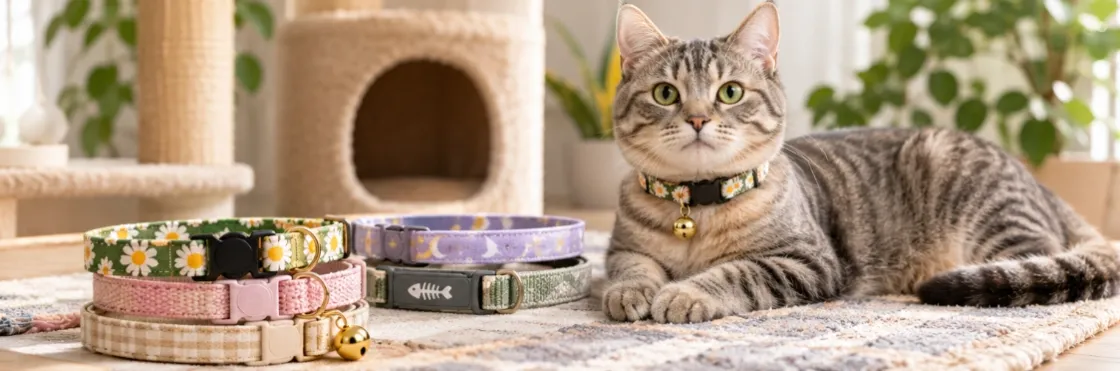
Pet Harnesses
Why Are Dog Brands Launching Cat Harnesses When Many Cats Dislike Them?
Explore why dog accessory brands are entering the cat market, what cats really need, and how to develop better cat harnesses, collars and leashes.
Why Are Dog Brands Launching Cat Harnesses When Many Cats Dislike Them?
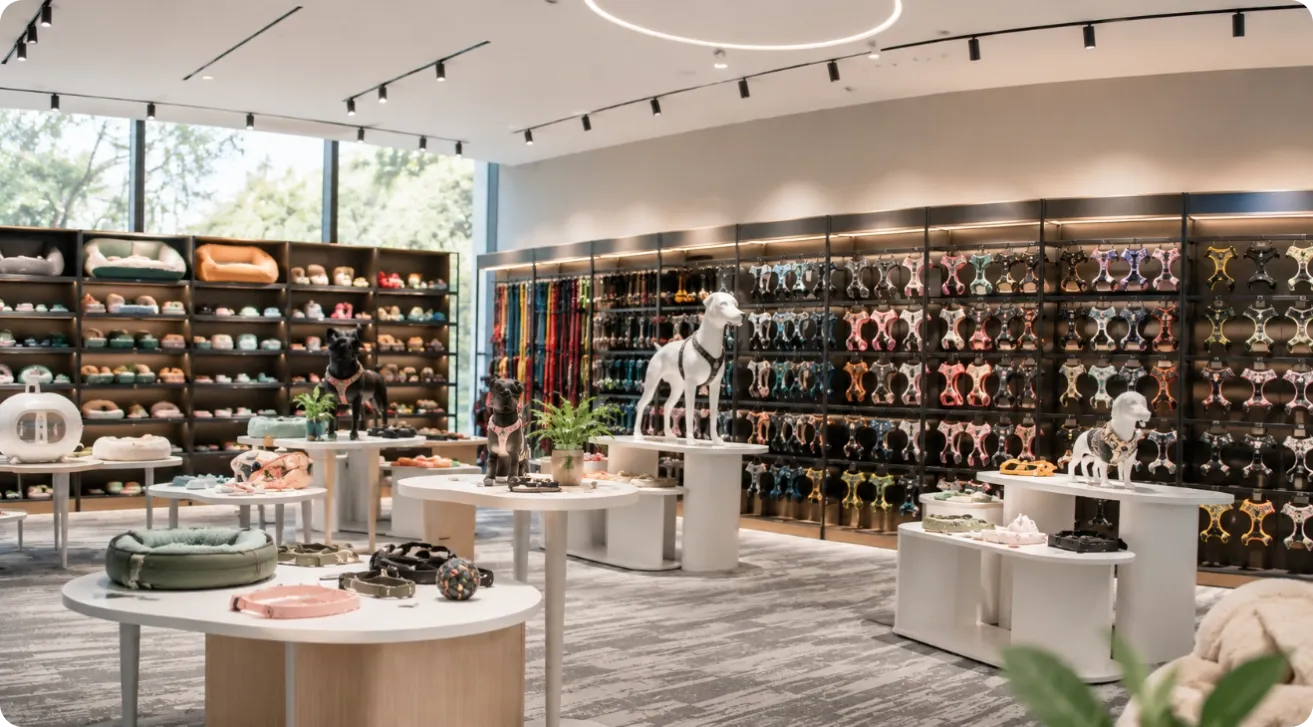
Walk into a modern pet boutique, and you'll notice something interesting. Brands once known mainly for dog harnesses, collars and leashes are increasingly offering accessories for cats.
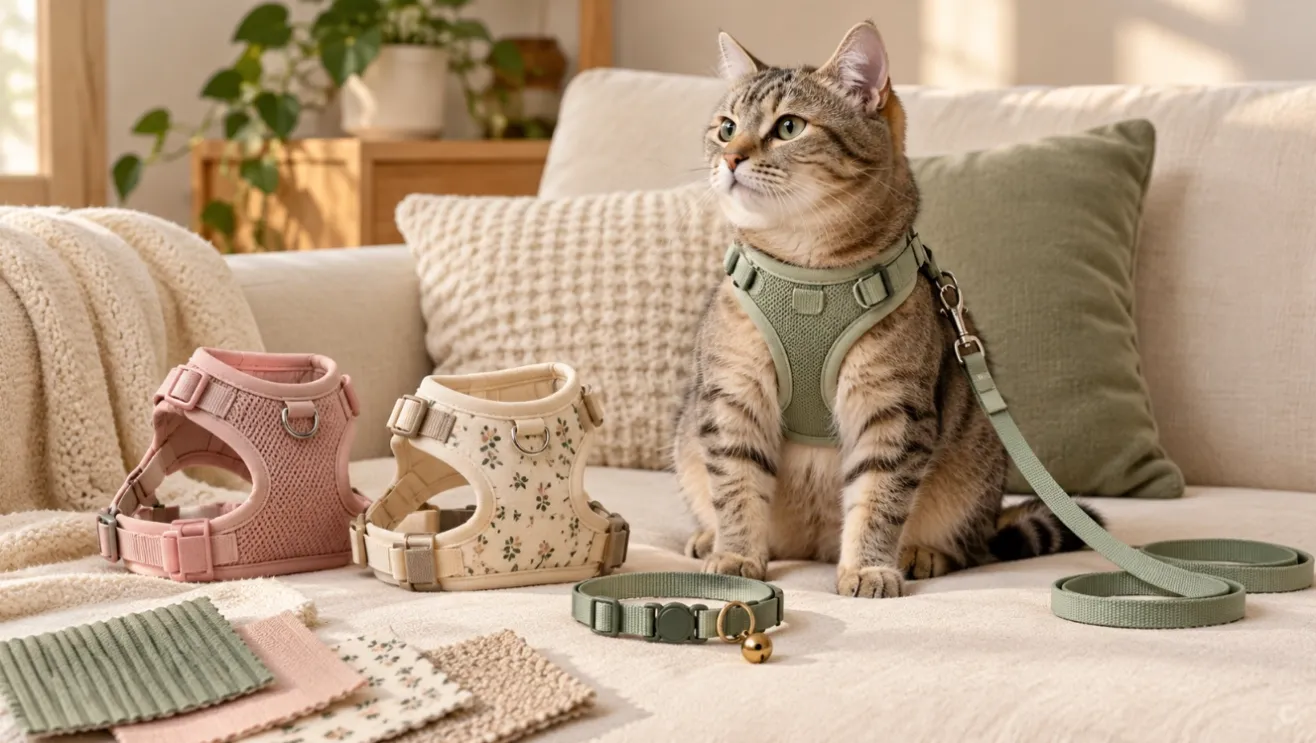
The products look familiar: coordinated colors, adjustable straps, matching leashes and carefully designed packaging. Yet there is one important difference.
Cats are not small dogs.
Many cats dislike restraint, and some find wearing a harness stressful. So why are pet brands investing in cat walking accessories?
The answer lies somewhere between changing consumer interests, brand expansion and a relatively specialized product opportunity. For manufacturers and private-label buyers, it also raises an important question: how do you develop cat accessories that genuinely consider feline behavior?
From Dog Walking Collections to Cat Accessories
Dog walking accessories have become a recognizable product category for lifestyle-focused pet brands.
Harnesses, collars and leashes are no longer sold purely as functional equipment. Brands use coordinated colors, materials and collections to establish a visual identity.
Extending that identity into cat products is a logical commercial possibility.
Wild One, known for its dog walking accessories, now features a cat collection. Zee.Dog also offers cat collars, harness-and-leash sets, beds, toys and carriers.
These examples show how an established pet accessory brand can address both dog and cat customers.
However, the existence of these collections doesn't mean every cat owner wants a walking harness, or that every cat will tolerate wearing one.
That distinction is essential for responsible product development.
Why Do Many Cats Dislike Harnesses?
Cats have different behavioral needs from dogs.
Many cats prefer to explore familiar environments at their own pace. They may become uncomfortable when their movement is restricted or when they cannot retreat from something frightening.
A harness introduces unfamiliar pressure and contact around the body.
Some cats may freeze, crouch, attempt to escape or show other signs of distress.
According to UK animal welfare charity Cats Protection, many cats find harnesses stressful, particularly when restraint prevents them from responding naturally to perceived threats.
This does not mean every cat reacts the same way.
Some individual cats can gradually become comfortable wearing a suitable harness, especially when introduced carefully and without force.
But brands should avoid suggesting that all cats can or should be trained to enjoy leash walking.
The product must respect the animal's needs rather than simply reproduce a popular dog accessory.
Why Are Brands Entering the Cat Harness Market?
There are several commercial reasons.
First, established pet accessory brands already have customers who recognize their design style. Some of those households also have cats.
Offering a cat collection gives these customers another reason to purchase from a familiar brand.
Second, cat accessories can extend an existing product range without requiring the brand to enter a completely unrelated category.
A company already experienced in sourcing webbing, buckles, mesh and branded packaging may be able to use some of that knowledge when developing cat products.
Third, visually coordinated accessories can appeal to consumers who value design and consistency across their pet products.
Finally, there is a specific group of cat owners interested in controlled outdoor experiences, travel or other situations where an appropriately fitted harness may be considered.
This is a niche opportunity, not proof that cat harnesses are suitable for the entire cat population.
For brands, the commercial challenge is identifying the right customer rather than assuming that every cat owner represents a potential harness buyer.
What Can Brands Learn From Wild One and Zee.Dog?
The most useful lesson is not simply that these companies sell cat accessories.
It is how cat products can fit within a broader brand identity.
Wild One's product range demonstrates how a business associated with dog walking can also address cat owners.
Zee.Dog shows a broader category approach, offering cat collars, harness-and-leash sets and lifestyle products.
For emerging brands, this suggests two possible strategies.
One is to extend a successful dog walking collection with selected cat accessories using related colors and branding.
The other is to develop a more comprehensive cat collection that includes products beyond walking equipment.
The second approach may help a brand reach cat owners who have no interest in harness training.
In either case, the products should be developed for their intended users rather than copied directly from existing dog designs.
Why a Small Dog Harness Is Not a Cat Harness
A common sourcing mistake is assuming that an XXS dog harness can simply be relabeled for cats.
Although the products may look similar, fit and movement requirements differ.
Cats have flexible bodies and may move backward, twist or attempt to escape when uncomfortable.
Their shoulder movement, chest proportions and sensitivity to pressure deserve careful consideration.
A cat harness should be evaluated for its intended feline users, including adjustment range, coverage, weight and possible escape routes.
The design should avoid unnecessary bulk or pressure around sensitive areas.
However, no harness should be described as completely escape-proof without appropriate evidence, and even a well-fitted product may not prevent escape in every situation.
For OEM buyers, the correct starting point is a cat-specific design brief, not simply reducing the dimensions of a dog harness.
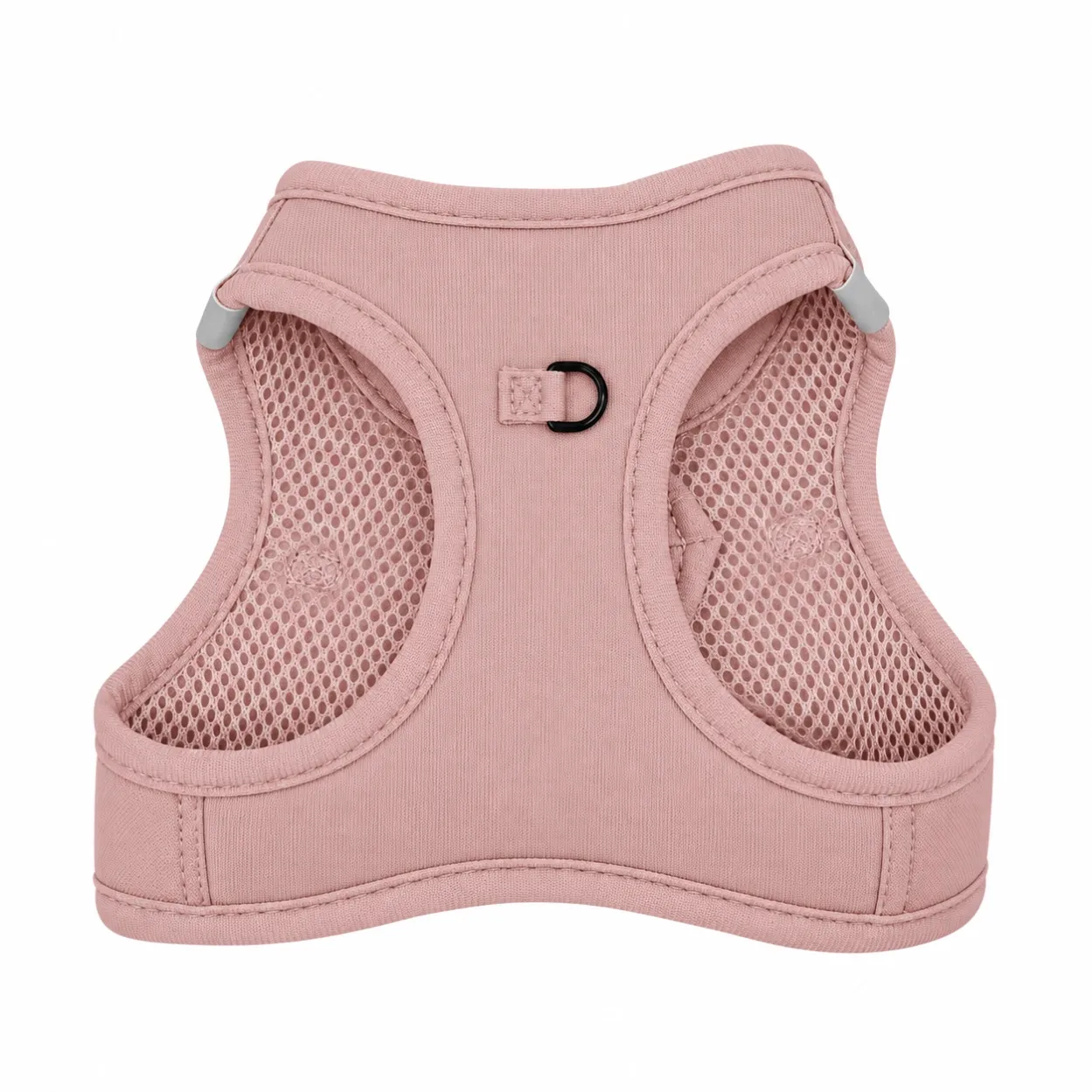
Choosing Materials for Custom Cat Harnesses
Material selection is another area where dog and cat products may differ.
Heavy-duty webbing and large metal components may be appropriate for certain dog products but unnecessarily bulky for some cat harness designs.
Lightweight mesh, suitable woven materials and soft contact surfaces may be worth evaluating.
The objective is to balance comfort, adjustability, construction quality and intended function.
Manufacturers should review the edges of fabric panels, stitching placement and how adjustment components contact the cat's body.
A soft material alone does not guarantee a comfortable product.
Fit, construction and individual tolerance remain important.
During sampling, buyers should request clear material specifications and evaluate the finished harness rather than relying only on fabric photographs.
Cat Collars Need a Different Safety Approach
Cat collars present another important distinction.
For everyday identification collars, a suitable breakaway or quick-release safety mechanism may be appropriate to reduce entanglement risks.
The release behavior should be evaluated according to the collar's intended use and relevant safety guidance.
A conventional fixed dog collar should not automatically be used as a cat identification collar.
Equally important, a leash should not be attached directly to a cat's everyday collar for walking.
A properly fitted harness is the more appropriate equipment if an individual cat is suitable for supervised harness use.
Brands should clearly distinguish between identification collars and harnesses intended for controlled outdoor activities.
These are different products with different safety considerations.
Should Brands Sell Cat Harnesses With Matching Leashes?
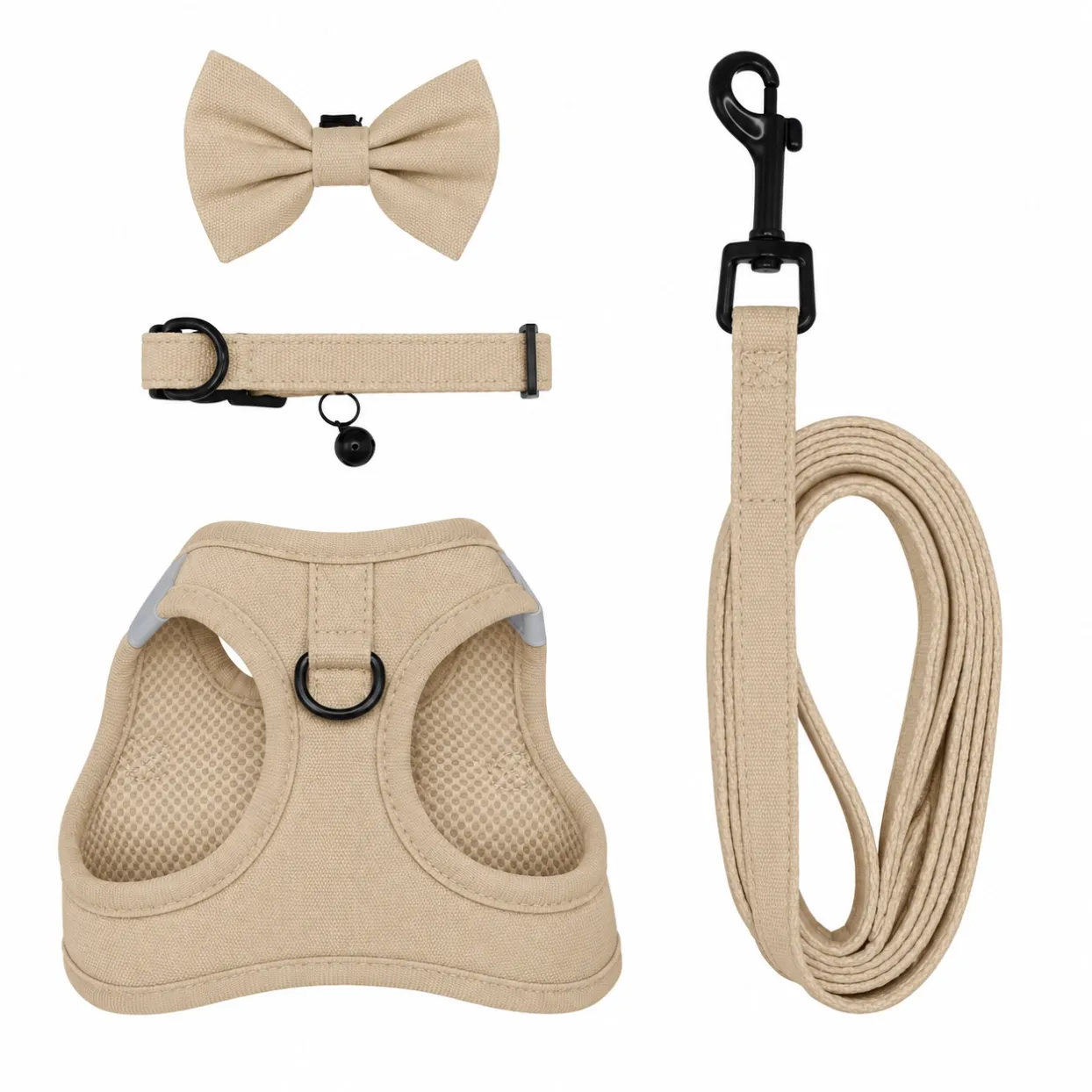
A coordinated harness-and-leash set can be commercially attractive.
It simplifies purchasing and gives the brand more control over the appearance and compatibility of the components.
For a private-label collection, matching colors, hardware finishes and packaging can also strengthen brand recognition.
However, the leash should be selected with the intended cat use in mind.
Buyers should review its length, weight, attachment hardware and handling characteristics.
A heavy clasp designed for a large dog may not be appropriate for a lightweight cat harness.
Likewise, retractable or highly elastic configurations should not be selected simply because they are popular in dog accessories.
The finished system needs to be evaluated as a complete product.
The Importance of Honest Product Marketing
One of the biggest opportunities for cat accessory brands is also one of their biggest responsibilities.
Marketing should not imply that every cat enjoys outdoor walking.
Photographs of a relaxed cat wearing a harness can be attractive, but they do not establish that the product is suitable for all cats.
Brands should provide clear sizing information, gradual introduction guidance and warnings about signs of stress.
Customers should understand that some cats may never become comfortable with a harness.
For those cats, suitable indoor enrichment and other welfare-conscious activities may be preferable.
Responsible marketing may appear less exciting than promising outdoor adventures for every cat, but it helps customers make more informed decisions.
How Should a Dog Brand Test a Cat Collection?
For an established dog accessory brand, the first cat collection doesn't need to be extensive.
A focused assortment can help evaluate demand without creating unnecessary inventory complexity.
One possible approach is to develop a cat-specific adjustable harness, a compatible lightweight leash and a suitable identification collar.
The products could share selected colors or branding elements with the existing dog range.
Before launch, the brand should evaluate samples with qualified product-development input and appropriate consideration of feline behavior.
Feedback should address fit, ease of adjustment, movement, signs of discomfort and the practical limitations of the design.
If the intended customers are primarily indoor-cat owners, other categories such as toys, beds or carriers may deserve greater priority than walking equipment.
The product strategy should follow genuine customer needs.
OEM Manufacturing Considerations for Cat Accessories
When contacting a custom cat harness manufacturer, buyers should provide more than a reference photograph.
A useful development brief includes the intended cat size range, proposed measurements, adjustment points, preferred materials and hardware specifications.
It should also explain the intended use of the product.
A harness designed for brief supervised outdoor access may require different considerations from an everyday identification collar.
For a coordinated collection, brands should specify color references, woven labels, logo placement and packaging requirements.
The manufacturer should review the construction and provide samples for evaluation before bulk production.
Quality requirements, applicable testing and destination-market compliance should be discussed early.
For UK, EU and US buyers, product claims and regulatory responsibilities need to be assessed according to the actual product and sales market.
Can Existing Dog Accessory Supply Chains Support Cat Products?
For businesses already sourcing dog harnesses, collars and leashes, cat products may offer some operational advantages.
Certain manufacturing processes, such as webbing cutting, sewing, mesh construction, printing and label application, may already be familiar to the production team.
Some materials and color references may also be shared across collections.
However, common manufacturing capabilities should not be confused with interchangeable product specifications.
A cat harness may require different patterns, hardware, adjustment ranges and evaluation methods.
A supplier experienced in dog accessories should still demonstrate that the proposed cat design is appropriate for its intended use.
This is where a sourcing partner can help coordinate development across product categories while keeping the specifications separate.
What About MOQ and Inventory Risk?
Cat accessories may represent a new category for a brand that already has an established dog customer base.
That makes inventory planning important.
Rather than launching many designs, sizes and colors immediately, buyers can begin with a focused collection and expand after reviewing demand.
Custom harnesses, collars and leashes may have different minimum order quantities depending on their construction, materials and customization requirements.
Brands should request quotations based on the actual size and color breakdown rather than assuming that one MOQ applies to every product.
Shared fabrics and colors may simplify sourcing, but they do not automatically eliminate component or production minimums.
The goal should be a commercially manageable launch supported by appropriate product development.
The Bigger Opportunity: Designing for Cats, Not Just Cat Owners
The expansion of dog accessory brands into cat products is understandable.
Brands want to serve more customers, introduce coordinated collections and build on their existing product-development experience.
But the most important question is not whether a cat harness looks attractive on a product page.
It is whether the product meets a genuine need for the cats and owners it is intended to serve.
For some cats, carefully introduced harness use may be possible. For many others, it may be stressful or unsuitable.
That reality should influence product design, sizing, safety information and marketing.
Brands that recognize the difference between dog and cat behavior are better positioned to develop thoughtful cat accessory collections.
Develop Custom Cat Harnesses, Collars and Leashes With JABARI PET
JABARI PET supports pet brands, retailers and private-label businesses sourcing custom pet accessories through manufacturing partners in China.
Our product scope includes harnesses, collars, leashes and coordinated walking accessories.
For brands considering expansion from dog products into cat accessories, we can help review reference designs, discuss materials and customization requirements, and coordinate sample development.
Each project is evaluated according to its intended use, construction and order requirements.
Request a Custom Cat Accessories OEM Quotation
Are you planning to add cat harnesses, collars or leashes to your existing pet brand?
Send JABARI PET your reference images, proposed sizes, preferred materials, branding requirements and expected order quantity.
Let us know whether you are developing a cat-only collection or matching products for an existing dog accessory range.
We can review your concept and discuss suitable OEM/ODM development options.
JABARI PET — Custom Pet Product Sourcing & Manufacturing Partner
Contact us to discuss your custom cat harness, collar and leash collection.