Sep 7, 2026Private Label Pet Products
Private Label vs Semi-Custom vs Full OEM: Which Is Right for Your Pet Brand?
Not every pet brand needs full OEM. Compare private label, semi-custom and full OEM by MOQ, cost, speed and differentiation to choose the right sourcing path.
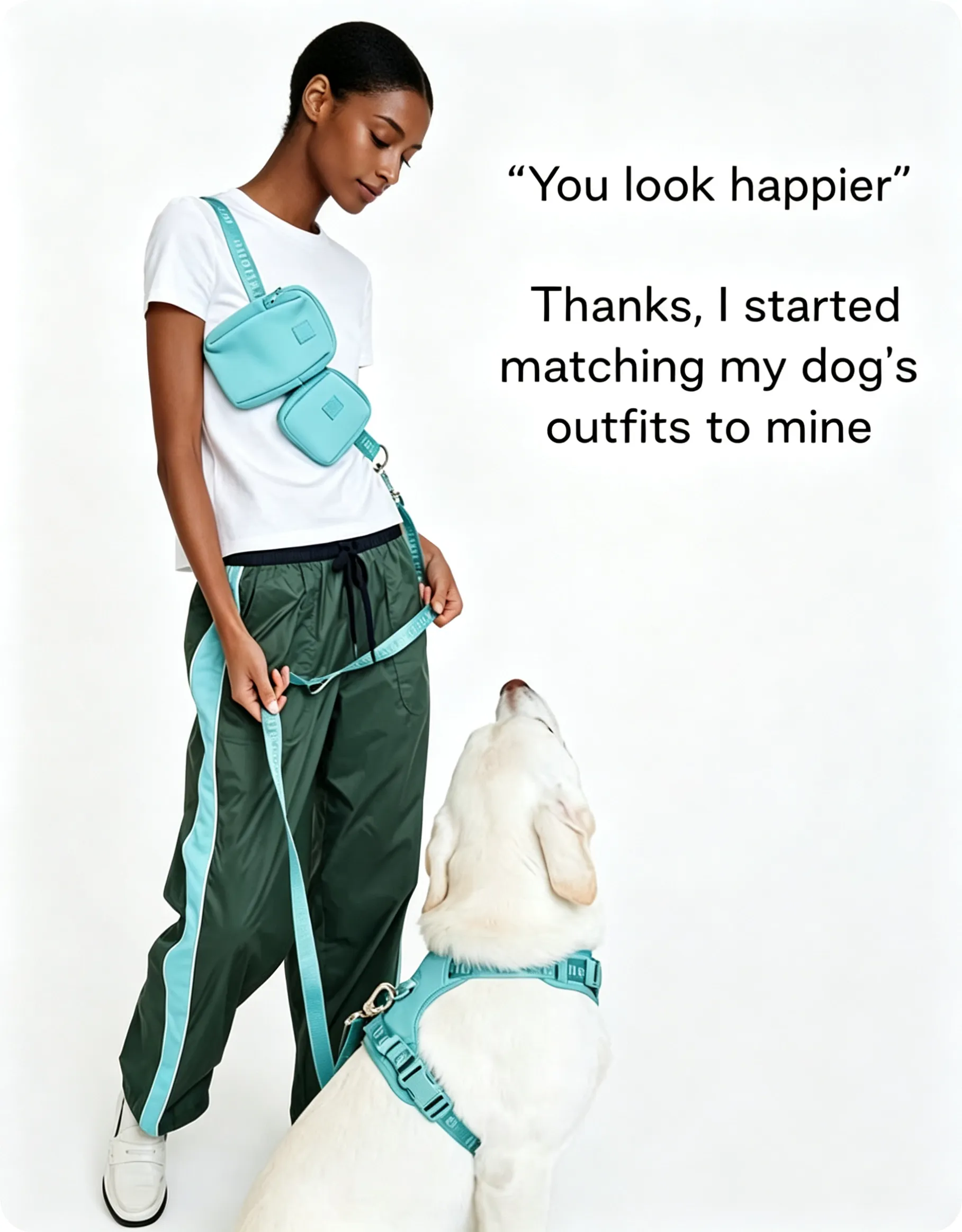
Private Label vs Semi-Custom vs Full OEM: Which Is Right for Your Pet Brand?
One of the most common problems we see in pet product development is not a lack of ideas. It is trying to customize too much, too early.
A new pet brand may send an AI-generated dog harness concept and request a completely new structure, custom fabric, exclusive buckles, special hardware, branded packaging and five colors. Then MOQ, tooling costs and sample revisions enter the discussion, and the project suddenly becomes much larger than expected.
The problem is usually not the idea. The development model does not match the current stage of the brand.
For pet brands, retailers and Amazon sellers, there are three practical sourcing routes:
Private Label → Semi-Custom → Full OEM
None is automatically better. A startup testing its first collection has very different requirements from an established retailer ordering thousands of units.
The right question is therefore not, “How much can we customize?”
It is, “How much customization does this product need to prove its commercial value?”
This distinction is especially relevant as private label continues to perform strongly in the U.S. market. Pet care was one of the strongest private-label departments in 2025, including 5.4% unit growth according to industry reporting.
What Is Private Label Pet Product Development?
Private label normally starts with an existing product.
The supplier has already developed the pattern, basic materials and manufacturing process. The buyer selects the product and adds branding.
For example, an existing padded dog harness might be customized with:
- Woven logo
- Rubber logo
- Hang tag
- Packaging
- Existing color selection
The fundamental harness construction remains unchanged.
This route is usually faster because there is less technical development before production.
For new brands, that can be a major advantage.
When Does Private Label Make Sense?
Private label works particularly well when the brand is still validating customer demand.
Imagine an Amazon seller launching its first dog walking collection.
The seller does not yet know whether customers will prefer olive, beige, pink or black. It also does not know which sizes will move fastest or what return rate the product will generate.
Investing immediately in custom molds, exclusive materials and completely new patterns increases risk before the brand has useful sales data.
An existing product with suitable quality allows the company to test:
Price + Color + Size + Branding + Sales Channel
before investing in deeper development.
Private label can therefore be considered a market-validation tool, not simply a cheap sourcing option.
What Are the Limitations of Private Label?
The main limitation is differentiation.
If multiple brands buy the same harness and only change the logo, customers may easily find similar products elsewhere.
This can make the product compete heavily on:
- Price
- Advertising
- Photography
- Packaging
- Brand awareness
Once a product begins selling consistently, the brand may need something more distinctive.
That is where semi-custom development becomes useful.
What Is Semi-Custom Pet Product Development?
Semi-custom development keeps a proven product foundation while changing the details customers can see or value.
For a dog harness, this might include:
- Custom fabric
- Exclusive color palette
- Jacquard webbing
- Different padding
- Custom embroidery
- Reflective trim
- Hardware finish
- Handle design
- Packaging
The base construction may remain similar.
This reduces development risk while giving the product a stronger brand identity.
For many growing pet brands, semi-custom is the most commercially useful middle ground.
Why Is Semi-Custom Often More Efficient Than Full OEM?
Brands sometimes think they have only two choices:
Generic product or completely custom product.
In reality, meaningful differentiation often comes from a few visible improvements.
Take a standard Y-shaped harness.
Instead of rebuilding the entire pattern, a brand could change:
Standard polyester → textured performance fabric
Plain webbing → custom jacquard webbing
Generic hardware → consistent matte hardware
Basic logo → embroidery or molded branding
The product now looks much more distinctive without requiring every component to be developed from zero.
This is particularly relevant to current UK and European design trends, where coordinated colors, considered materials and cohesive collections continue to influence accessory development. UK industry commentary for 2026 highlights more thoughtful color palettes, materials and cohesive design across accessory categories.
Which Materials Work Well for Semi-Custom Collections?
Material selection is one of the easiest ways to create differentiation without rebuilding the entire product.
Jacquard Webbing
Jacquard webbing can turn a relatively standard collar or leash into a recognizable branded product.
The design is woven into the webbing, making it useful for coordinated harness, collar, leash and bag collections.
The main sourcing consideration is material MOQ. Brands should therefore consider using the same webbing across several products.
Textured Fabrics
Corduroy, velvet-style materials, fleece and woven textures can help create boutique or seasonal collections.
Current pet-fashion commentary continues to highlight jacquard, corduroy, velvet and fleece as ways to create stronger tactile and visual differentiation.
Instead of developing a new harness structure for autumn, a brand may be able to refresh an existing construction through material and color.
Waterproof Coated Webbing
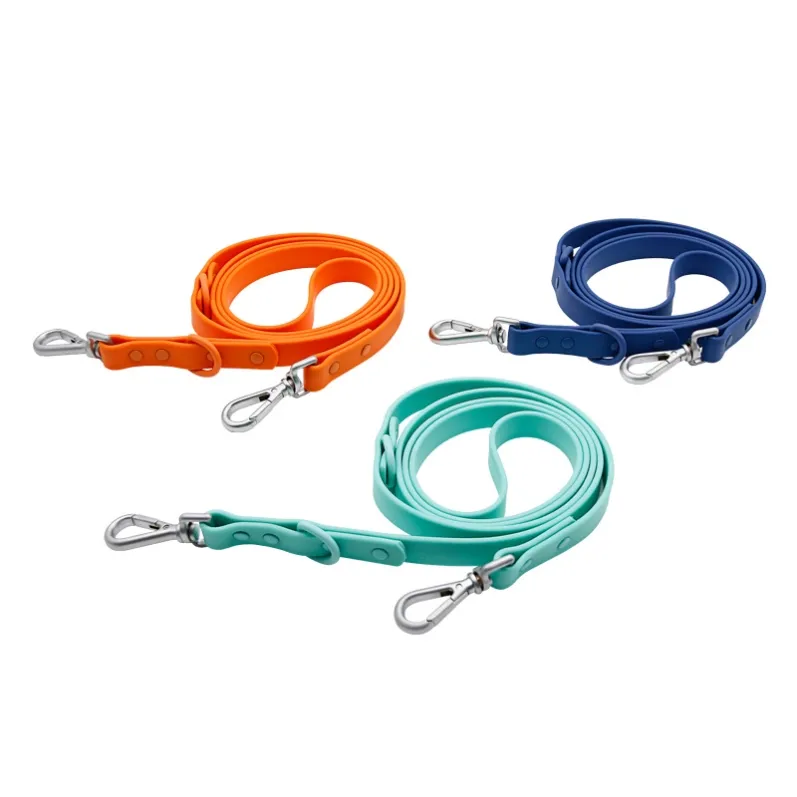
TPU/PVC-style coated webbing works well for outdoor collars, leashes and long training leads.
One material can potentially support several products, making it easier to spread material MOQ across a collection.
Breathable Mesh
For everyday and warm-weather harnesses, breathable mesh and lightweight fabrics remain useful development directions. Current harness-market commentary emphasizes breathable mesh, lightweight polyester webbing, neoprene and quick-dry fabrics for daily-use and outdoor products.
What Is Full OEM Pet Product Development?
Full OEM is appropriate when existing supplier structures cannot deliver the product the brand needs.
Development may begin from:
- Technical drawings
- Measurements
- Physical reference samples
- Detailed specifications
- Product-development briefs
A completely new harness may require new panel shapes, new sizing, different adjustment points, reinforced load-bearing areas or unique attachment positions.
This is real product development rather than visual customization.
It usually requires more sampling because the team is testing not only appearance but also construction and fit.
When Is Full OEM Worth the Investment?
Full OEM makes sense when customization solves a meaningful problem.
For example, a brand may receive repeated reviews saying existing harnesses do not fit certain dog body shapes.
The brand then develops a new adjustment system.
That creates functional differentiation.
Another brand may focus on professional training products and require specific attachment positions, reinforced handles and higher load-bearing specifications.
Again, the structure itself matters.
Full OEM is easier to justify when it creates:
Better Fit + Better Function + Better User Experience + Stronger Differentiation
Changing a buckle simply because it looks slightly different may not justify the same investment.
Why Can Full OEM Become Expensive?
Sampling cost is only part of the issue.
The larger cost is development uncertainty.
A new harness may require several rounds:
Sample 1: Check structure.
Sample 2: Correct fit.
Sample 3: Adjust webbing position.
Sample 4: Confirm materials and colors.
Changing one component may affect another.
Custom components can also introduce their own MOQ.
A custom buckle may require tooling.
Custom jacquard webbing may require a minimum material run.
Special hardware plating may have a separate MOQ.
Printed fabric may have another minimum.
This means the finished-product MOQ is not always the most important MOQ.
Brands should ask what component MOQs exist before approving the design.
How Should a New Pet Brand Choose?
A practical decision framework looks like this:
Brand Situation | Better Starting Point |
|---|---|
Testing the first product | Private Label |
Testing a new category | Private Label |
Proven product needs stronger branding | Semi-Custom |
Brand wants exclusive colors/materials | Semi-Custom |
Existing products cannot solve the required function | Full OEM |
Unique fit or construction is essential | Full OEM |
Low initial budget | Private Label / Semi-Custom |
Proven volume and customer demand | Semi-Custom / Full OEM |
The purpose is not to restrict creativity.
It is to match product-development risk with commercial evidence.
What Should Amazon Sellers Do Differently?
Amazon sellers have access to extremely useful product-development information after launch.
Reviews can reveal:
- Fit problems
- Weak buckles
- Difficult adjustment
- Color preferences
- Packaging complaints
- Size confusion
Returns provide another signal.
If customers repeatedly complain that a chest strap is too short, that may justify a pattern modification.
If customers like the product but competitors look too similar, a custom fabric or webbing may be enough.
The next OEM version should therefore be based on sales evidence, not simply the desire to make something different.
What Should UK and EU Boutique Brands Consider?
UK and European boutique brands often compete strongly through design.
Coordinated colors, matching accessories and distinctive materials can create a recognizable identity without requiring a completely new structure every season.
A practical model is:
Core Harness Structure + Seasonal Material + New Color + Matching Accessories
The same approved harness can become an autumn corduroy collection, a spring pastel collection or an outdoor waterproof collection.
That keeps development controlled while allowing the brand to refresh its visual identity.
European market commentary also points to continued interest in sustainability, premium materials and pressure around sourcing transparency and packaging.
For B2B buyers, that means material choice increasingly affects both marketing and sourcing decisions.
How Can Retailers Combine All Three Models?
Retailers do not need to choose one development model for every product.
A stronger assortment might use:
Private Label for entry-level accessories.
Semi-Custom for retailer-exclusive colors and coordinated collections.
Full OEM for hero products that create real differentiation.
This creates a product architecture.
It also prevents the retailer from spending full-development budgets on low-priority SKUs.
How JABARI PET Approaches OEM/ODM Development
At JABARI PET, we work with pet brands, retailers and Amazon sellers developing harnesses, collars, leashes, apparel, bags and related pet accessories.
We do not believe every inquiry needs to become a completely new product.
For some projects, an existing product with custom branding is the most practical starting point.
For others, changing materials, webbing, hardware, logo placement or packaging creates enough differentiation.
When the customer's concept genuinely requires a different structure, deeper OEM development can begin through sampling, specification confirmation and production testing.
The objective is to match the development method to the commercial stage of the product.
Final Answer: Customize Where Customers Will Notice
The pet private-label market continues to create opportunities for retailers and emerging brands, but stronger competition also makes disciplined product development more important.
The development path does not need to begin with maximum customization.
A more practical progression is:
Private Label → Validate Demand
Semi-Custom → Build Brand Identity
Full OEM → Create Defensible Differentiation
This allows the brand to invest more as commercial evidence becomes stronger.
Before asking a supplier:
“Can you make this completely custom?”
ask:
“Which parts actually need to be custom for customers to choose our product?”
That question can reduce development cost, control MOQ and help turn customization into commercial value rather than unnecessary complexity.