Private Label Pet Products
Breakaway Cat Collars vs. Regular Collars: An OEM Sourcing Guide
Learn how to source custom breakaway cat collars, including safety buckles, webbing, bells, ID tags, AirTag holders and private label options.
Breakaway Cat Collars vs. Regular Collars: An OEM Sourcing Guide
A cat collar may look like a smaller version of a dog collar, but one component can make a significant difference: the buckle.
For pet brands expanding from dog accessories into cat products, choosing the right collar construction is not simply a matter of selecting narrower webbing or smaller hardware.
Cats climb, squeeze through narrow spaces and explore their surroundings differently from dogs. A collar that becomes caught on an object can create a serious hazard.
This is why breakaway collars are widely recommended for everyday cat identification.
For OEM buyers, the challenge is to combine appropriate safety considerations with attractive colors, comfortable materials and practical manufacturing requirements.
At JABARI PET, we help pet brands source custom collars, harnesses and leashes through manufacturing partners in China.
This guide explains the main differences between breakaway and conventional collars, along with the design decisions buyers should consider before requesting a private-label quotation.
What Is a Breakaway Cat Collar?
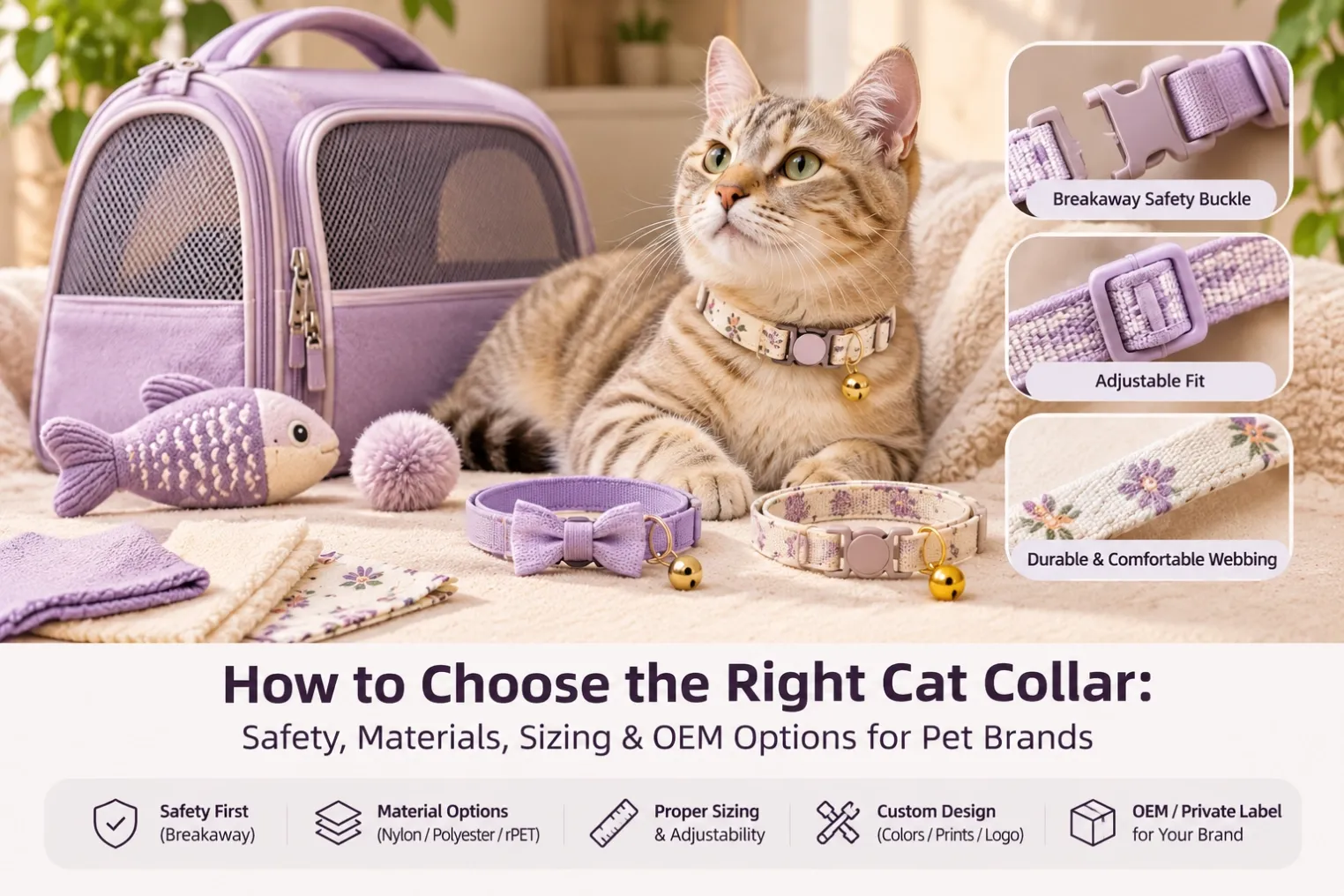
A breakaway cat collar uses a release mechanism designed to open when a specified pulling force is applied.
The purpose is to reduce the risk of a cat remaining trapped if the collar catches on an object.
Unlike a conventional fixed buckle, a breakaway mechanism is intended to release under appropriate conditions.
However, the release behavior depends on the actual buckle, collar construction and relevant forces.
Not every buckle marketed as a safety buckle performs identically.
For OEM development, buyers should ask suppliers to explain the selected mechanism and discuss appropriate evaluation methods.
A breakaway collar should not be described as eliminating every possible entanglement risk.
Why Regular Dog Collars Are Different
Many conventional dog collars are designed to remain securely fastened during ordinary use.
Depending on the product, they may use fixed plastic buckles, metal buckles or other closure systems.
These designs serve different purposes from an everyday cat identification collar.
Simply reducing the width and length of a dog collar does not change how its buckle functions.
For example, a narrow polyester collar with a standard fixed buckle is still a fixed-buckle collar.
For brands developing cat products, the release mechanism should be selected according to the intended use rather than copied from an existing dog accessory.
The product description should also clearly identify whether the collar is intended for identification or another specific purpose.
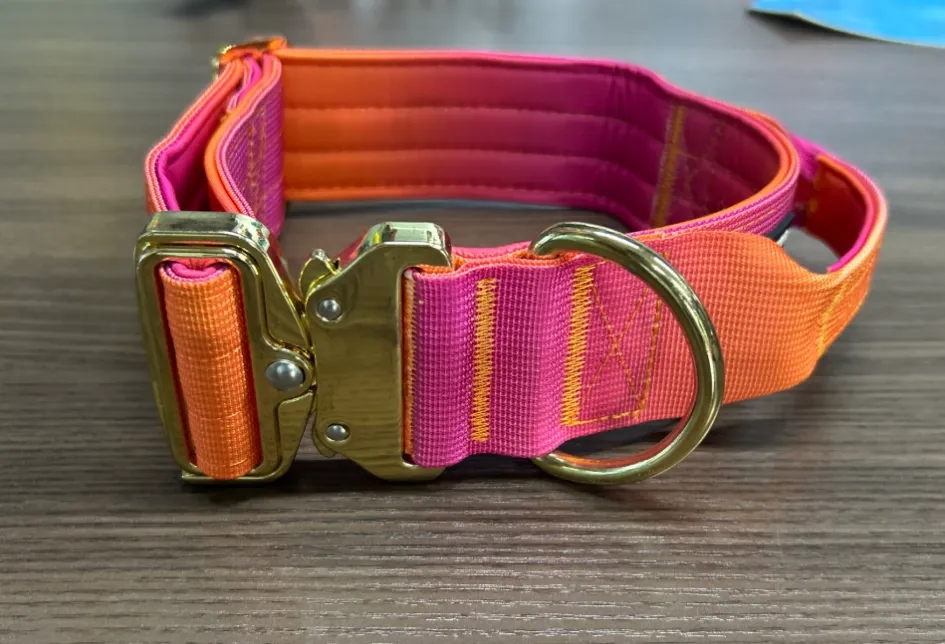
How Does a Cat Safety Buckle Work?
A breakaway buckle generally uses a mechanical connection that separates when sufficient force is applied.
The actual release behavior depends on the buckle's design and construction.
Different mechanisms may respond differently to the direction and amount of force.
The finished collar may also behave differently from an isolated buckle component.
This is why buyers should evaluate the complete product rather than relying solely on a supplier's statement that the buckle is "safe."
If a particular release-force requirement is needed, the measurement method and acceptance criteria should be agreed before production.
Any performance claims should be supported by appropriate evidence.
Choosing the Right Collar Width
Cat collars are generally designed with narrower and lighter components than many dog collars.
However, there is no universal width that is appropriate for every cat.
The suitable dimensions depend on the intended users, material, adjustment system and finished construction.
A wider collar may provide more space for printed designs or branding, but it may also add bulk.
A very narrow collar may create other construction or comfort considerations.
For OEM buyers, the correct approach is to specify the intended fit range and evaluate physical samples.
The collar should be adjustable without leaving excessive loose material or creating unsuitable pressure.
Clear customer fitting instructions are also important.
Nylon, Polyester and Other Webbing Options
Polyester and nylon webbing are commonly considered for pet collars.
Both can be produced in different colors, widths and constructions.
The final selection depends on the required appearance, handling characteristics and product specification.
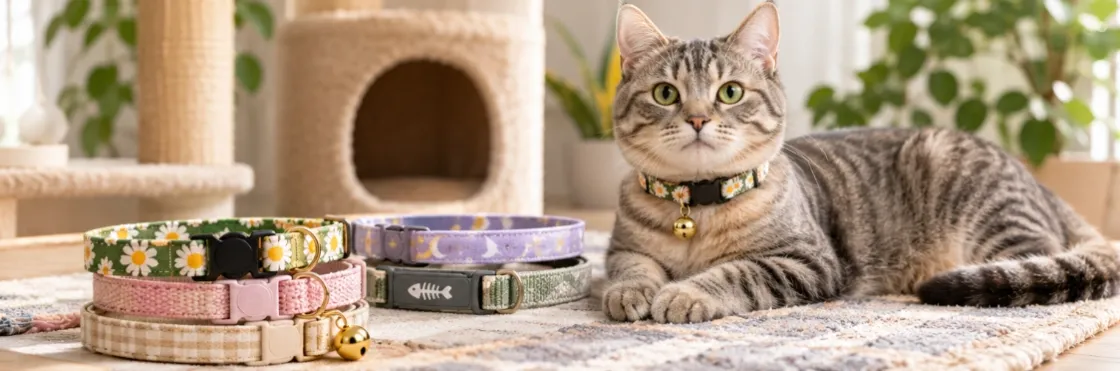
Printed polyester webbing may suit brands developing floral, seasonal or patterned collections.
Plain woven webbing can provide a simpler appearance and may be combined with woven labels or other suitable branding.
Other materials can be evaluated, but buyers should consider thickness, edge finishing and compatibility with the selected buckle.
A material that works well in a dog collar may not automatically be suitable for a lightweight cat collar.
Printed Cat Collars for Private Label Brands
Custom printing is one way to create a recognizable cat accessory collection.
A brand might develop botanical patterns, colorful geometric designs or minimalist seasonal colors.
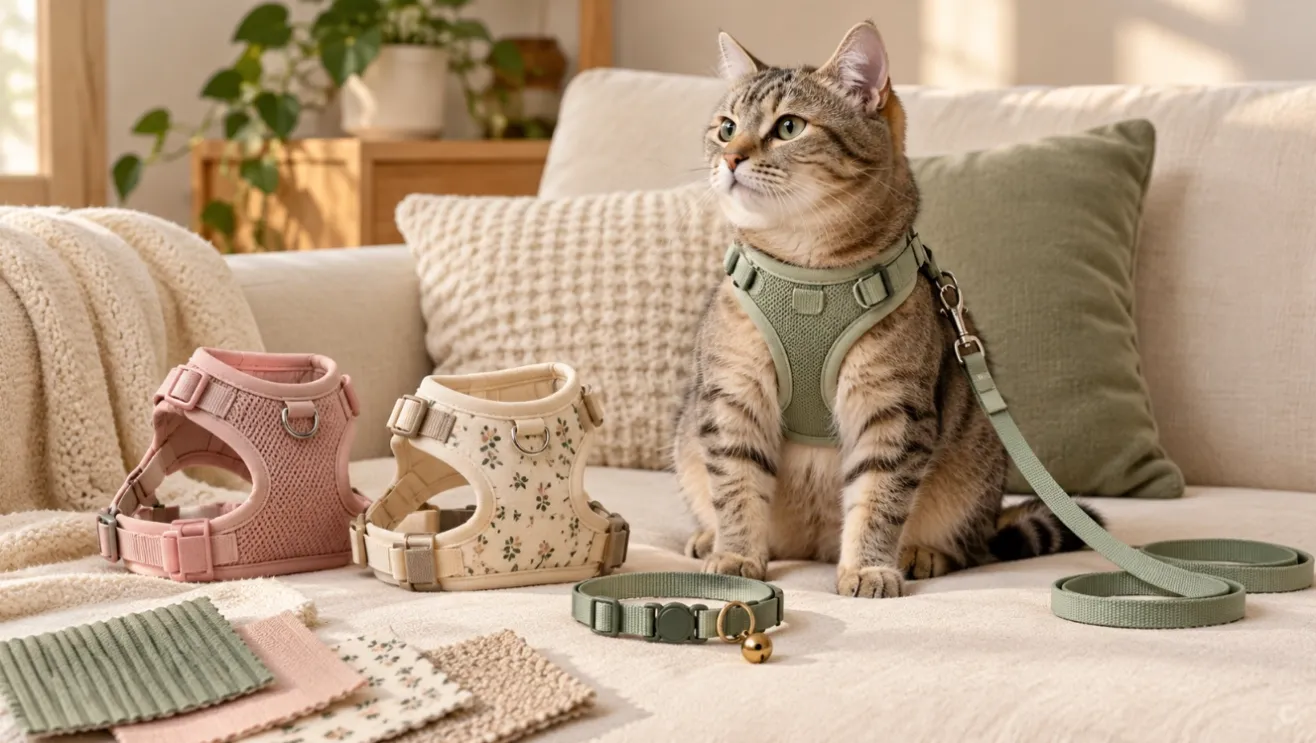
For a coordinated collection, the same artwork could be adapted for collars, harnesses and matching accessories.
However, narrow webbing presents practical design limitations.
Large motifs may be cut off, and small details may be difficult to reproduce clearly.
Buyers should review the pattern scale and printing method before approving production.
Color consistency also matters when different products use different fabrics.
A printed collar and a mesh harness may not reproduce the same color in exactly the same way.
Physical material references can help establish reasonable expectations.
Should Cat Collars Include Bells?
Bells are a familiar feature of many cat collars.
Some owners choose them because they want to hear where their cat is moving or hope to reduce wildlife hunting.
However, bells are not appropriate for every cat or every situation.
The additional component may affect weight, sound and how the collar is worn.
For OEM development, buyers should evaluate the bell's dimensions, attachment method and suitability for the intended product.
Any wildlife-related performance claims should be supported by relevant evidence rather than assumed.
Brands may wish to offer both bell and no-bell options to accommodate different customer preferences.
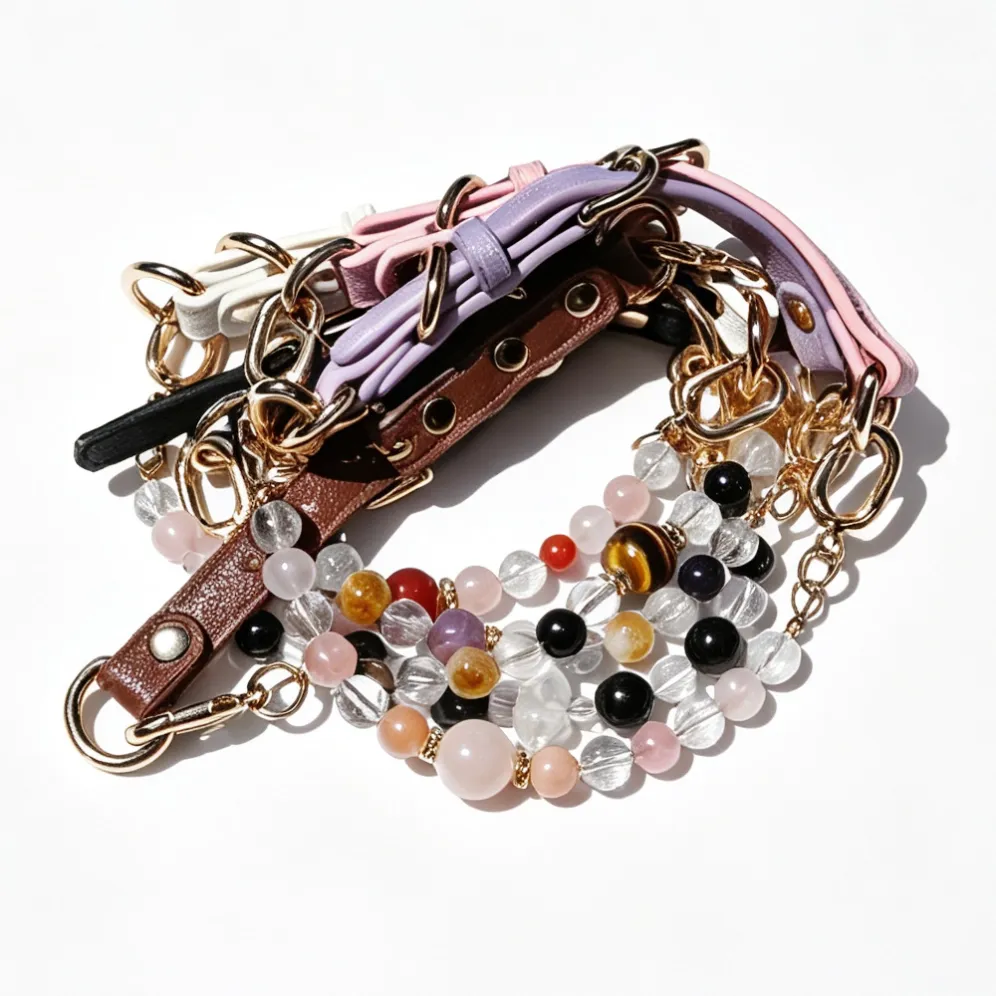
ID Tags and Nameplates
Identification accessories can add practical value to a cat collar.
Options may include lightweight hanging tags or suitable identification elements integrated into the collar.
However, every additional component affects the finished product.
A large metal tag may add unnecessary weight or create additional snagging concerns.
The attachment method should be evaluated alongside the collar's release mechanism.
Brands should also consider whether the identification information remains readable during normal use.
A collar can support identification, but it should not be presented as a replacement for microchipping where microchipping is required or recommended.
AirTag Holders for Cat Collars
Some pet brands are exploring collar accessories designed to hold consumer tracking devices.
This creates another customization opportunity, but it also introduces additional considerations.
A holder changes the collar's weight, thickness and external profile.
It may affect how the collar sits on the cat or interacts with surrounding objects.
Buyers should evaluate the complete collar-and-holder assembly, including whether the holder interferes with the breakaway function.
The device manufacturer's intended-use guidance should also be reviewed.
For example, Apple does not market AirTag as a dedicated pet-tracking device.
Brands should avoid describing a generic holder as a guaranteed pet safety or tracking solution.
Cat Collar Sizing and Fit Instructions
A useful cat collar size chart should provide an actual adjustment range rather than relying only on labels such as Small or Medium.
Buyers should define the measurement method and the intended fit range.
The finished collar should be checked to ensure the adjustment slider functions properly and does not create excessive loose material.
Fit instructions should be written for customers who may be purchasing a cat collar for the first time.
Brands should also explain that the collar needs regular checking as the cat grows or changes condition.
For kittens, sizing and suitability require particular care.
A product should not be marketed for every age or size without appropriate evaluation.
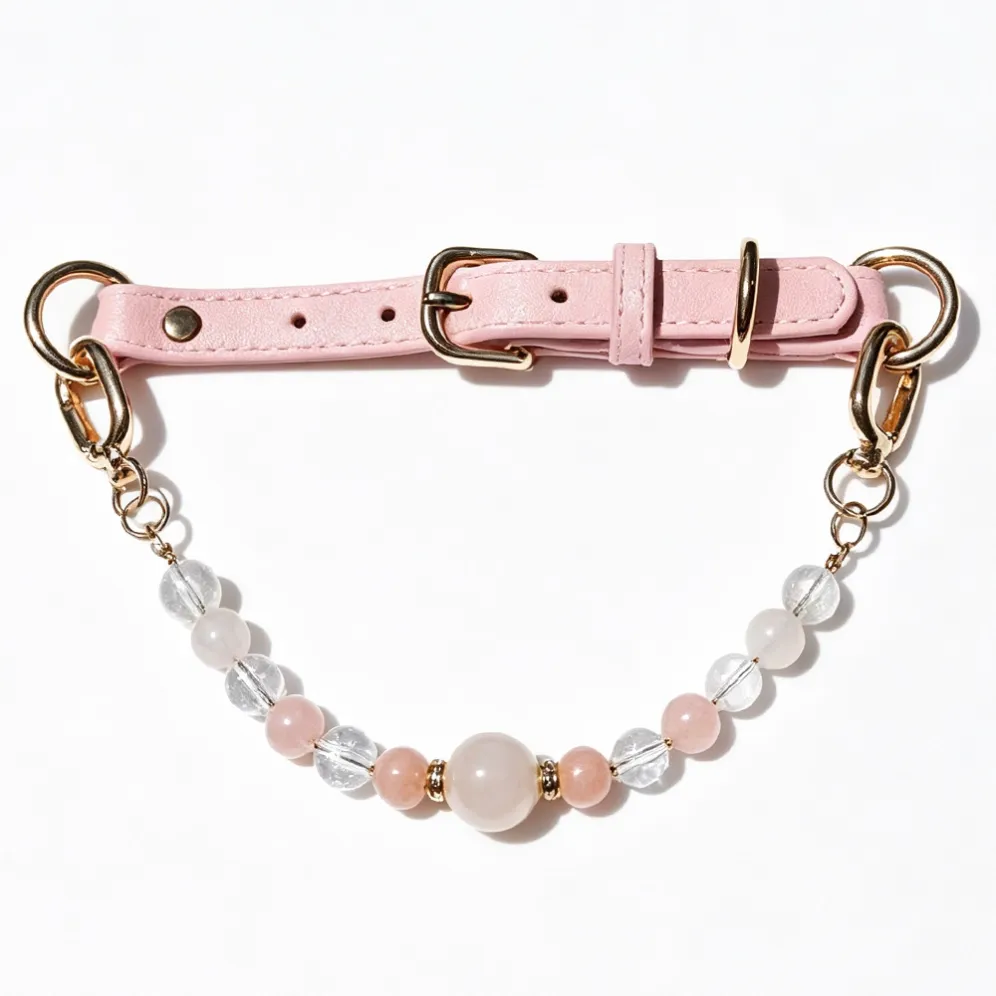
How to Evaluate a Breakaway Collar Sample
Sample approval should cover more than appearance.
Start by checking the webbing width, color, printing, stitching and dimensions.
Review how the adjustment system operates and whether the selected buckle matches the approved specification.
The release mechanism should be evaluated using appropriate methods and agreed acceptance criteria.
Additional components such as bells, tags and holders should also be reviewed.
If the product is intended for multiple sizes, each relevant configuration may require evaluation.
Any changes to the buckle or webbing after sample approval should be reviewed before bulk production.
Quality Control During Bulk Manufacturing
A consistent production process is important for private-label cat collars.
Inspectors may check webbing dimensions, stitching, buckle installation, adjustment function and visual appearance.
Where release performance is part of the specification, an appropriate inspection or testing plan should be established.
Buyers should confirm how samples will be selected and what constitutes an acceptable result.
The inspection process should also cover packaging and labeling.
A visual check cannot establish every relevant safety or regulatory requirement, so testing and documentation should be planned separately when necessary.
Packaging and Retail Presentation
Cat collars are compact products, which can offer flexible packaging options.
Brands may consider printed hang cards, simple retail packaging or other formats suitable for their sales channels.
The packaging should identify the product and provide relevant fitting and safety information.
For Amazon and other online marketplaces, sellers should review the current product identification, labeling and fulfillment requirements.
For EU, UK and US markets, applicable product safety and traceability obligations should be assessed.
Packaging should not make unsupported claims about the collar's release performance or overall safety.
MOQ and Pricing for Custom Cat Collars
The MOQ for a private-label cat collar depends on the selected construction, webbing, buckle, printing and branding requirements.
Using an existing buckle and available webbing may involve different minimum quantities from developing custom-colored components.
Printed webbing, woven labels and retail packaging may also have their own production minimums.
For an accurate quotation, buyers should provide the intended quantity by design, color and size.
Pricing may be influenced by material selection, hardware, sewing, customization and packaging.
Any setup charges or special component costs should be identified separately.
For a new brand, limiting the number of designs and colors can make the first order easier to manage.
Developing a Matching Cat Accessories Collection
A breakaway cat collar can be part of a broader private-label collection.
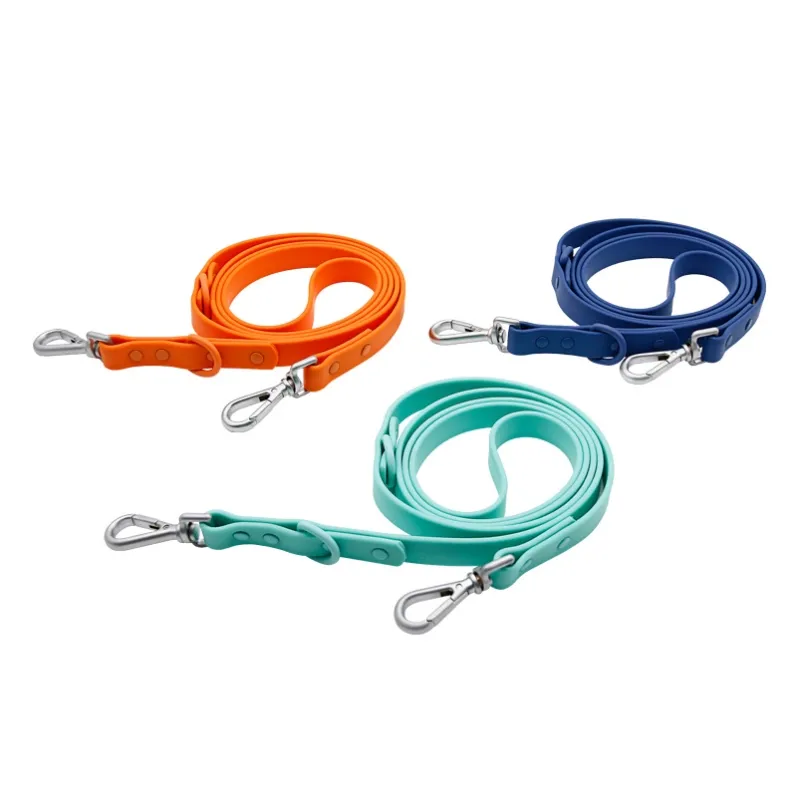
Brands may develop coordinated colors and patterns across identification collars, cat-specific harnesses and matching leashes.
However, each product should use construction and hardware appropriate to its intended function.
A breakaway identification collar should not be treated as a leash attachment point.
Likewise, a cat harness should not be assumed suitable simply because it uses the same webbing or print.
Coordinated branding can connect the collection visually while allowing different technical specifications.
Work With JABARI PET on Custom Cat Collars
JABARI PET helps international pet brands, retailers and private-label businesses source custom pet accessories through manufacturing partners in China.
Our product scope includes collars, harnesses, leashes and coordinated accessory collections.
For cat collar projects, we can help review reference designs, discuss webbing and hardware options, coordinate sample development and communicate branding requirements with production partners.
Each project is evaluated according to its intended use, specifications and order requirements.
Request a Private Label Cat Collar Quotation
Planning to launch custom breakaway cat collars for your brand?
Send JABARI PET your reference images, preferred collar width, size range, buckle requirements, colors, logo artwork and estimated quantities.
If you want matching harnesses, leashes or additional accessories, include those details as well.
Please also identify your destination market and any specific testing or packaging requirements.
We can review your project and discuss suitable OEM/ODM sourcing options.
JABARI PET — Custom Pet Product Sourcing & Manufacturing Partner
Contact us to discuss your custom cat collar collection.