Aug 7, 2026Pet Business Guides
Should Pet Brands Develop a New Product or Upgrade an Existing Bestseller?
Should your pet brand create a new product or improve an existing bestseller? Learn how to make smarter development decisions before your next collection.
Should Pet Brands Develop a New Product or Upgrade an Existing Bestseller?
For growing pet brands, one of the hardest product development decisions is surprisingly simple:
Should we create something completely new—or make our existing bestseller better?
It is easy to assume that growth requires more products. New harness structures, new bags, new fabrics and new accessories can make a collection feel exciting.
But every completely new product also introduces new risks: new patterns, materials, suppliers, sampling rounds, sizing issues, testing requirements and inventory.
This is particularly important for pet brands, retailers and Amazon sellers operating in competitive UK, EU and US markets.
Sometimes innovation means developing a completely new product.
But very often, the smarter commercial decision is to take something customers already understand and improve it.
More New Products Do Not Automatically Create More Growth
A common sourcing problem occurs when a growing brand has its first successful collection.
The next question is:
"What should we launch now?"
The immediate reaction is often to request ten new products from suppliers.
This can create unnecessary complexity.
Every additional SKU affects inventory forecasting, photography, packaging, quality control, warehousing and marketing.
For a harness, adding a new design can also mean creating another size specification across XS, S, M, L and XL.
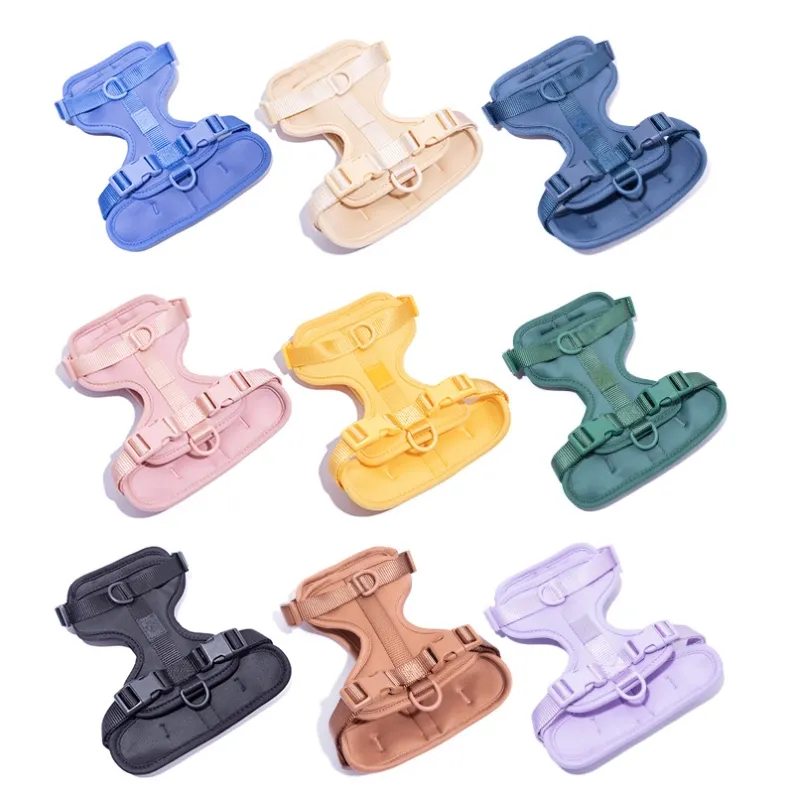
Five colours across five sizes already creates 25 SKUs from a single harness.
Introduce another structure and inventory complexity can increase quickly.
For this reason, mature product development should not begin with:
What else can our supplier make?
It should begin with:
What problem should our next product solve?
Start With Customer Feedback, Not a Supplier Catalogue
Before developing a new product, brands should study the problems appearing in their existing business.
For example:
Customers may like a harness but complain that the neck adjustment is limited.
Retail buyers may like the collection but ask for larger sizes.
Amazon reviews may mention that hardware feels too heavy for smaller dogs.
Customers may love a walking bag but want easier access to waste bags.
These are valuable product-development signals.
Instead of replacing a successful design, the next version could introduce:
- Adjustable neck straps
- Improved padding
- Lighter hardware
- Additional sizing
- Better reflective details
- Stronger webbing
- Improved pocket organization
This approach turns customer feedback directly into product development.
When Should a Brand Upgrade an Existing Product?
An existing product is usually worth improving when three conditions are present.
First, customers already understand the product.
Second, the core design is selling.
Third, complaints can be solved without changing the entire product concept.
Dog harnesses are a good example.
A brand may already have a successful lifestyle harness. Rather than developing an entirely different structure, Version 2 could improve the buckle, adjustment range, padding or hardware.
The recognizable silhouette remains.
The customer experience improves.
This is often lower risk than beginning from zero.
Real Market Example: Evolving a Product Instead of Abandoning It
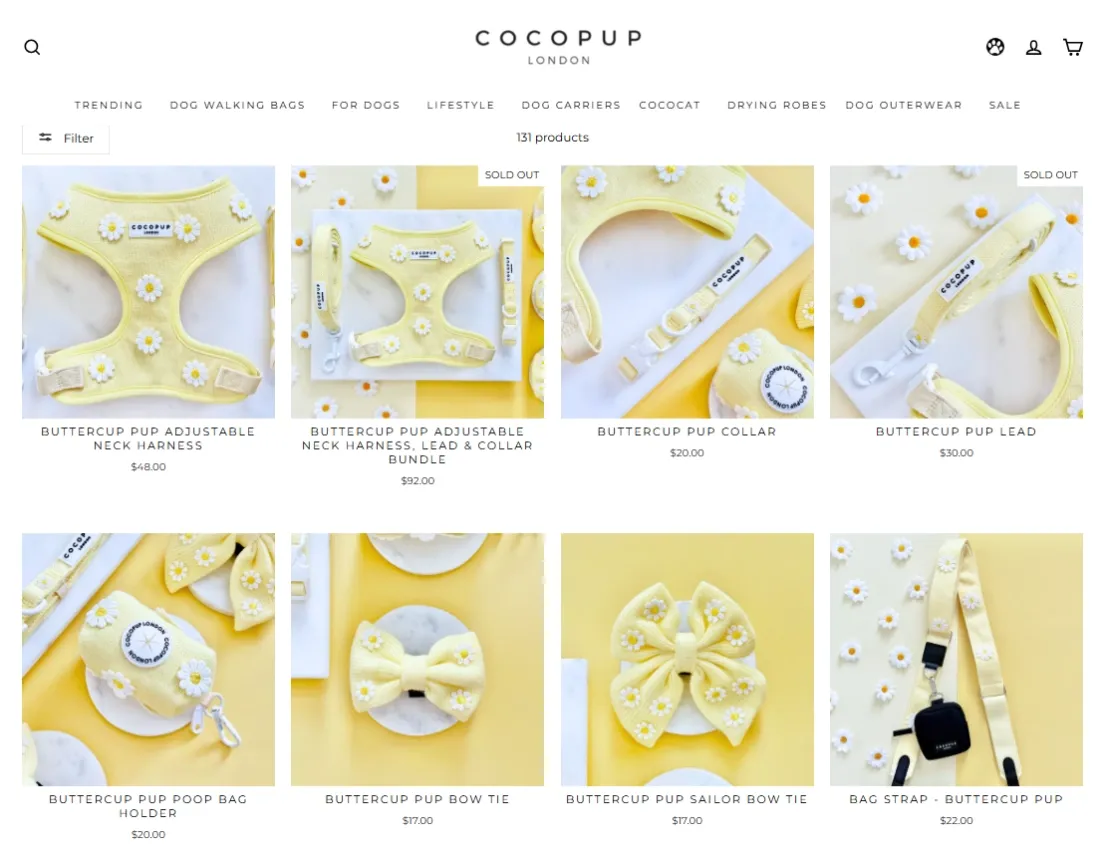
Current UK pet-accessory ranges provide a useful example.
Cocopup London currently sells a large range of adjustable-neck harnesses while also introducing a more performance-oriented Explore Harness.
The Explore version adds features including a back control handle, reflective trim, a locking buckle and a stated pull test of 187 kg.
From a product-development perspective, this is interesting.
The company has not stopped selling its established fashion-oriented harness range.
Instead, it has created another product proposition for customers requiring more functionality.
This illustrates an important lesson for private label brands:
Product development does not always require replacing what already works.
Different versions can serve different customer needs.
When Does a Completely New Product Make Sense?
There are situations where upgrading an existing product is not enough.
A new product becomes more logical when it solves a different customer problem.
Suppose your brand already sells harnesses, collars and leashes.
Customers may not need another harness.
They may need something that makes walking easier.
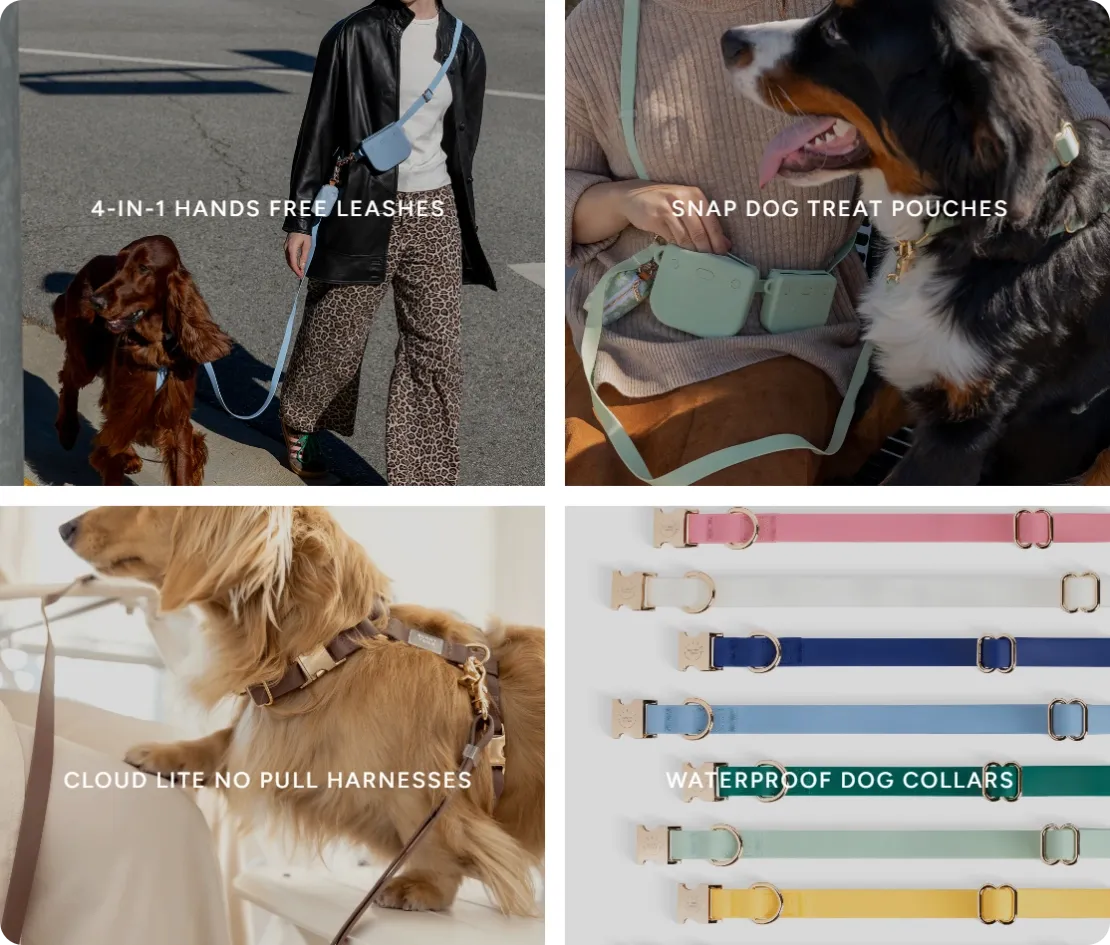
That creates opportunities for products such as:
- Dog walking bags
- Treat pouches
- Waste bag holders
- Travel accessories
- Portable water solutions
- Car accessories
The new product still belongs to the same customer journey, but performs a different function.
This is much stronger than randomly adding unrelated pet products simply because a factory can manufacture them.
Look at the Entire Dog-Walking Routine
One useful method is to map the customer's routine.
Before the walk:
Harness + collar.
During the walk:
Leash + treat storage + waste bags + personal essentials.
Travel:
Water + car restraint + portable accessories.
After the walk:
Cleaning + drying + storage.
Suddenly, product development becomes much clearer.
Instead of asking:
"What products are trending?"
You can ask:
"Where is there still friction in our customer's routine?"
That question can produce more commercially useful ideas.
Dog Walking Bags Show How Categories Can Evolve
Walking bags are a particularly interesting example because they sit between pet accessories and human lifestyle products.
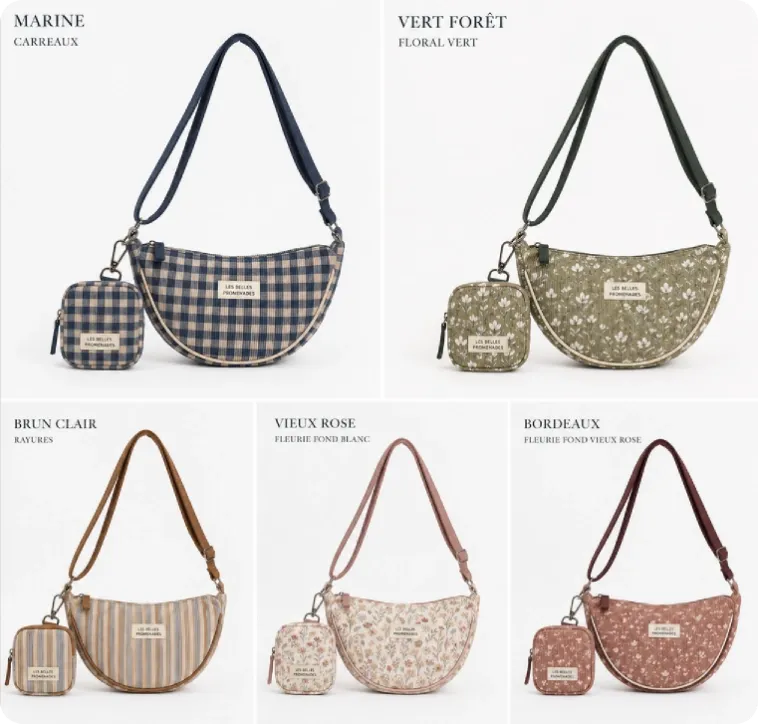
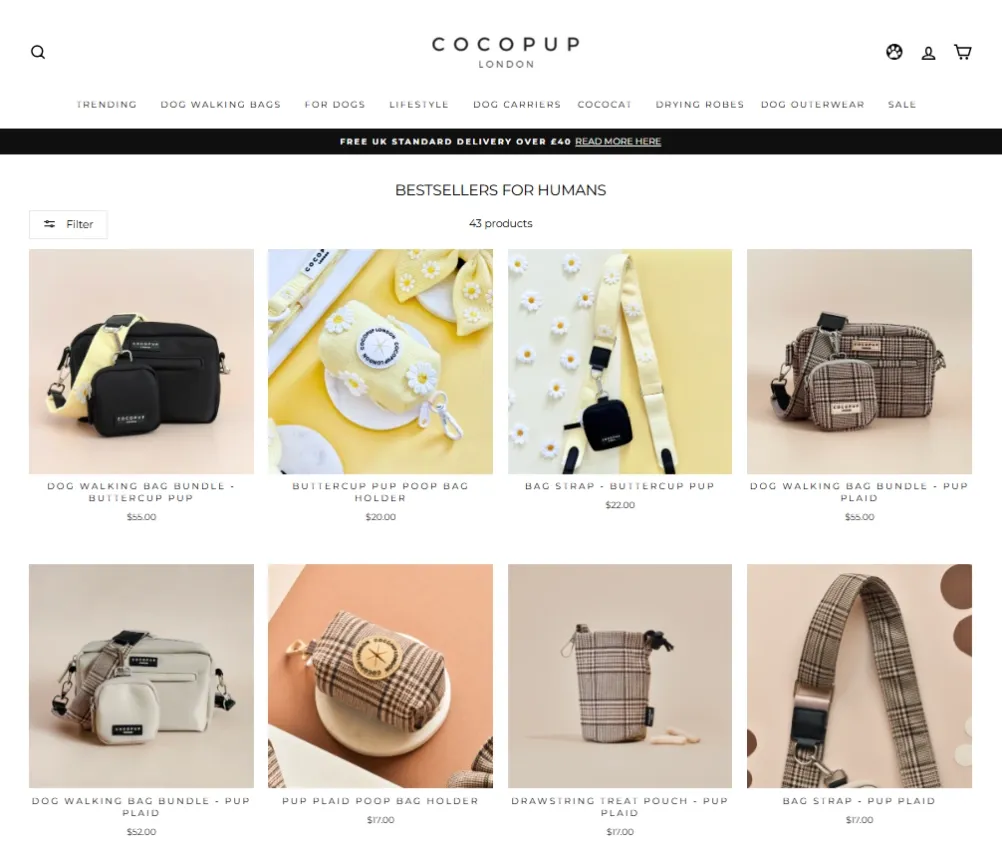
Cocopup's original walking bag combined a nylon bag with functional elements such as a built-in waste-bag dispenser, internal compartments and optional treat storage. The company has since introduced customizable versions and a larger crescent crossbody silhouette.
Its newer London Linen positioning goes even further by presenting the crossbody bag as something bridging high-street fashion and dog-walking utility.
For B2B product developers, this points toward an important trend:
Pet accessories increasingly compete with lifestyle accessories, not only other pet products.
That changes material, colour, shape and hardware decisions.
Material Upgrades Can Create a "New" Product Without New Tooling
One of the most overlooked OEM opportunities is material development.
A brand may not need a new pattern at all.
The same core harness could be repositioned using:
- Linen-look fabrics
- Corduroy
- Embroidery
- Jacquard webbing
- Waterproof coated materials
- Reflective trim
- Premium matte hardware
This can reduce development time because the underlying construction has already been tested.
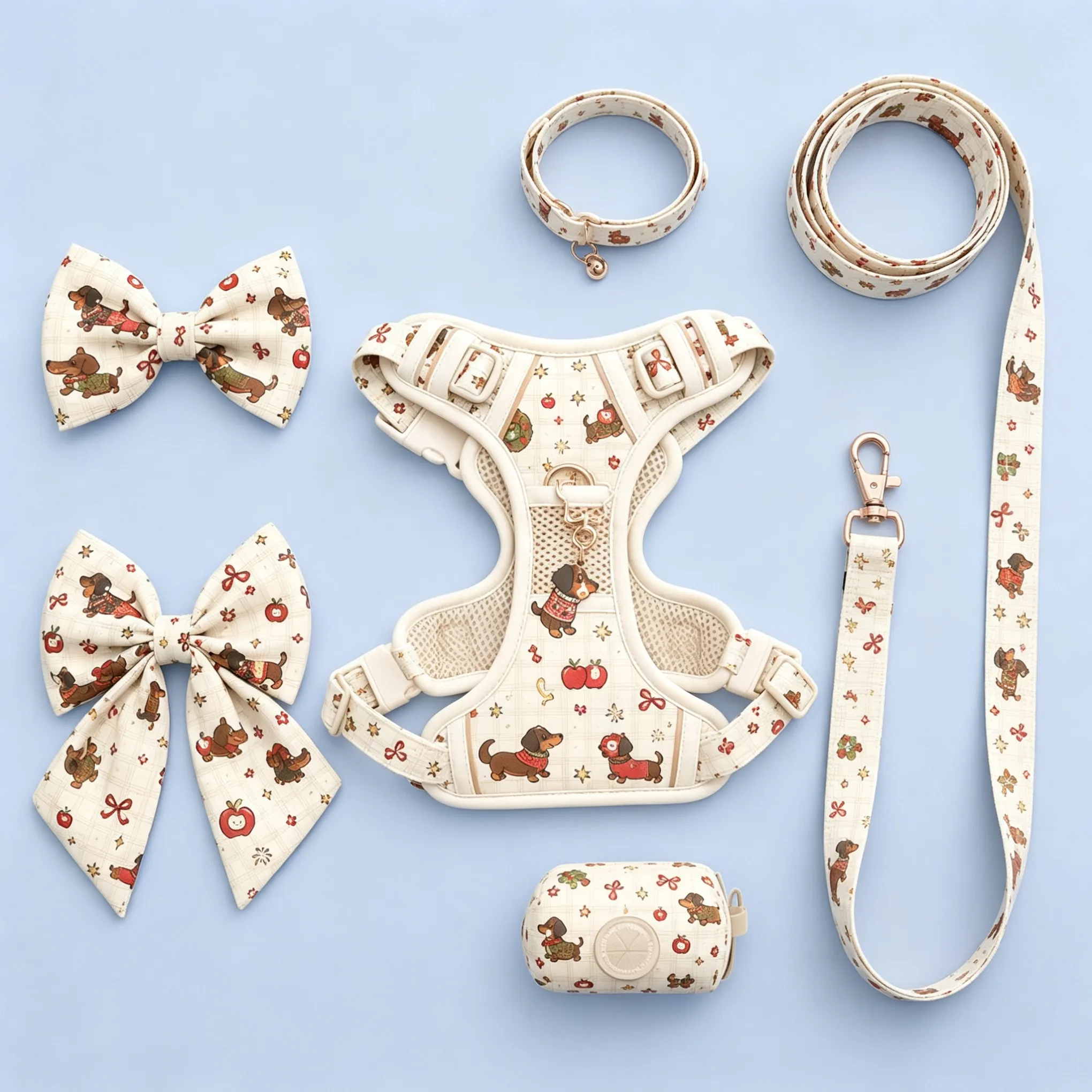
It can also create stronger collection consistency because matching collars, leashes and accessories can use the same material language.
For established private label brands, this is often more scalable than constantly developing new structures.
But Do Not Customize Everything
Customization has a cost.
A completely custom buckle, unique fabric, special webbing, exclusive metal hardware and custom packaging may sound premium.
But each component introduces another MOQ, lead time and potential quality-control point.
A commercially intelligent OEM project therefore separates customization into two groups:
Brand-defining details and invisible complexity.
Invest more in details customers can recognize:
- Signature fabric
- Distinctive colour
- Embroidery
- Branded webbing
- Recognizable hardware finish
Be more cautious about expensive changes customers cannot see or value.
Premium development is not about maximizing customization.
It is about choosing the right customization.
Ask Your OEM Partner About Production Risk Early
Before approving a new concept, brands should ask practical questions.
Can existing molds or hardware be used?
Does the fabric require a high minimum production quantity?
Will a new construction require multiple sampling rounds?
Can colours remain consistent across harnesses, collars, leashes and bags?
Will the product be easy to reproduce six months later?
These questions are particularly important when a collection is expected to scale.
A beautiful sample that cannot be reproduced consistently is not a successful commercial product.
Build Product Architecture, Not an Endless Catalogue
The strongest pet brands increasingly behave more like lifestyle brands.
They establish recognizable core products and then create controlled extensions.
A practical structure could be:
Core: Signature harness + collar + leash.
Collection extension: Matching waste bag holder + walking bag.
Seasonal update: New fabric, colour or embroidery.
Performance extension: More technical harness or waterproof collection.
This creates novelty without rebuilding the entire business every season.
It also makes sourcing easier because suppliers can reuse proven constructions, components and quality standards.
How JABARI PET Approaches Pet Product Development
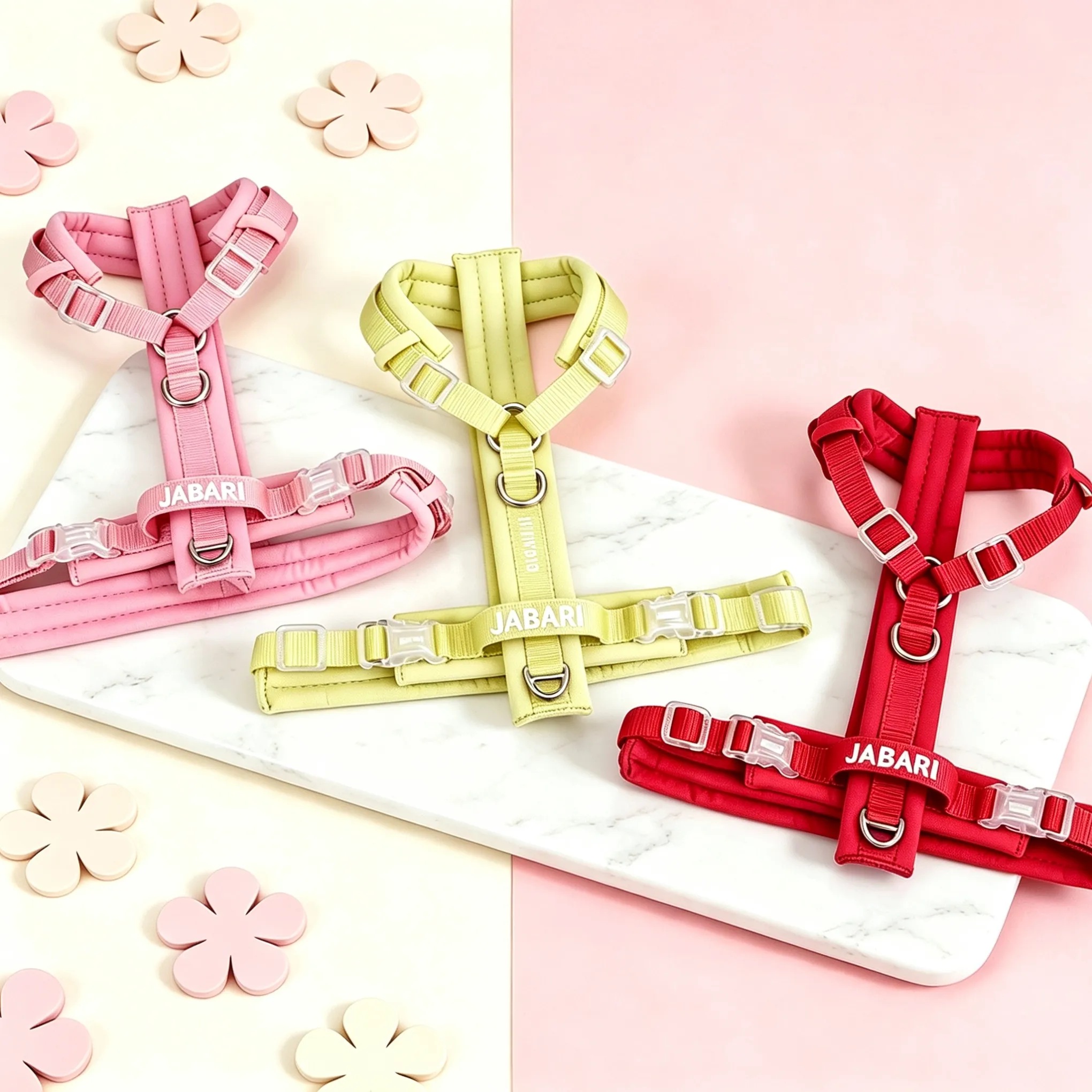
At JABARI PET, we work with pet brands, retailers and Amazon sellers on both existing-product upgrades and new OEM/ODM development.
Before recommending a completely new structure, we consider whether the commercial objective can be achieved through smarter changes to materials, fit, hardware, branding or accessories.
Our product-development support covers dog harnesses, collars, leashes, apparel, walking bags and other pet accessories, including material sourcing, sampling, branding, packaging and production coordination.
For growing brands, the goal should not be to create the largest catalogue.
It should be to build a product system that customers recognize and retailers can continue to sell.
Final Takeaway: Develop With a Reason
A new product should never exist simply because a supplier has something new in its catalogue.
There should be a commercial reason behind it.
If customers already love your product but identify specific weaknesses, improve it.
If an existing product can reach a new market through better materials or functionality, upgrade it.
If customers have an unmet need that your current collection cannot solve, develop something new.
That distinction can save months of sampling, reduce inventory risk and produce a much stronger private label collection.
For pet brands planning their next launch, the smartest question may therefore not be:
"What should we manufacture next?"
It may be:
"What should we make better?"
For market context, the current Cocopup London product range shows how a UK lifestyle pet brand is extending established walking categories through new functionality, materials and accessory formats rather than relying only on completely new categories.